The Ethics of Forced Alpha Gal Infection
Yes, you read that correctly. The most morally disgusting piece of “scientific literature” that I have read recently comes from the so-called Department of Medical Ethics, Humanities, and Law at Western Michigan University (Crutchfield & Hereth, 2025).
The Claim: Eating Meat is Morally Wrong
This paper starts with the claim that eating meat is morally wrong is one of the best and most widely accepted ideas in applied ethics. Therefore, their assertion that eating meat is morally wrong is widely accepted by those who have devoted their lives to the study of applied ethics; however, they assert that this should be the belief of all people.
Their justification for this claim comes from an article entitled, “Students eat less meat after studying meat ethics” (Schwitzgebel et al., 2023). In this study, 54% of students indicated that eating meat from factory farmed animals is unethical. Looking closer at this study, it involved 944 students at University of California, Riverside who were enrolled in philosophy courses – hardly a representative sample of the entire world. Only 35% of students were enrolled in an introductory philosophy class, indicating that 65% of participants were likely interested in the topics of morality and evil at a level higher than general education requirements. And yet, only 54% of participants felt that factory farmed meat was unethical.
Regardless of these limitations, the authors of “Beneficial Bloodsucking” state that eating meat is universally accepted as unethical and pin the remainder of their arguments on this belief (Crutchfield & Hereth, 2025). Building on that, they conclude that it is a moral obligation to promote the spread of alpha gal through tickborne infection.
Alpha-Gal Syndrome
If you are not familiar with alpha-gal syndrome (AGS), you probably live outside of a concentrated area of prevalence (Thompson, 2023; Wilson et al., 2024).
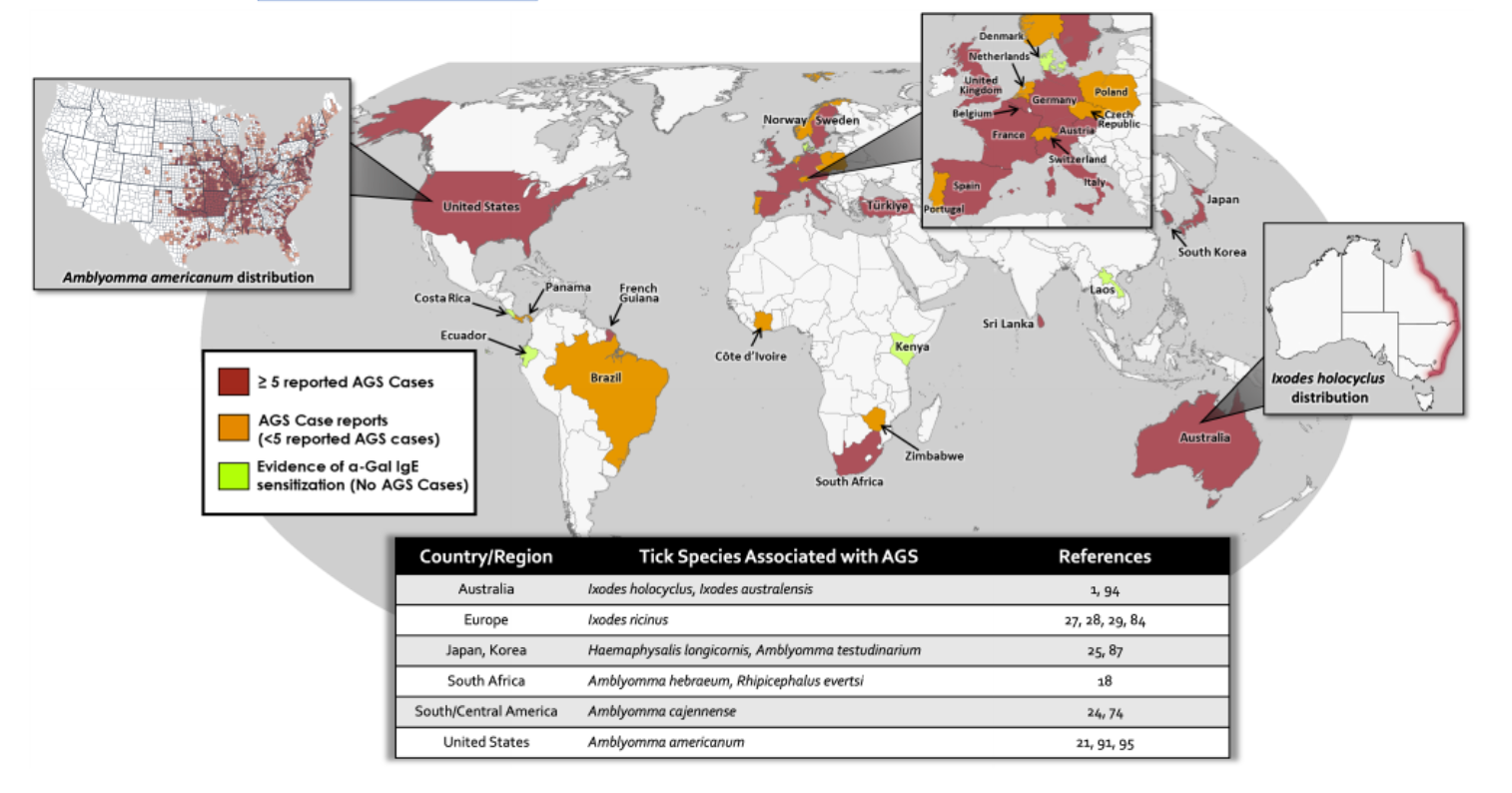
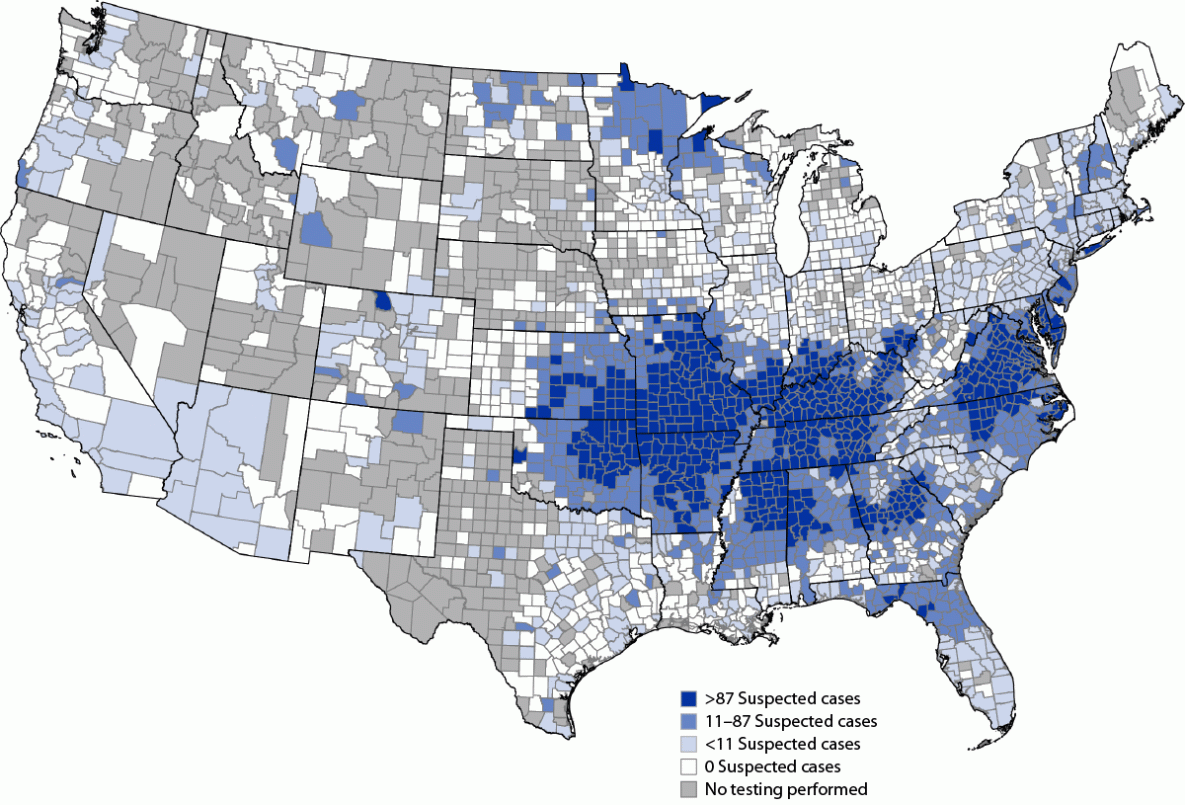
AGS is a life-threatening allergy to mammalian proteins (meat and dairy) that is transmitted by the Lone Star tick, as well as potentially other ticks, mosquitos, and chiggers (CDC, 2026a). Galactose-alpha 1,3-galactose is a disaccharide of two galactose molecules bonded together.
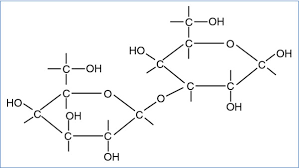
While we do consume disaccharides in our diet (mainly sucrose and lactose), the alpha gal sugar is not usually nutritionally significant for people and is not made by the human body. When some people are bit by ticks (and potentially other things), they can transmit the alpha-gal molecule into the blood stream and cause a chain reaction of allergic response.
Returning to the article, “Beneficial Bloodsucking,” I am not going to further discuss their claims that eating meat is morally wrong or universally accepted as such. There are wonderful people on both sides of the argument, and that is not my biggest concern with the article. In their opinion paper disguised as scientific research, the authors state that there is no harm of AGS aside from the inherent harms of eating meat (Crutchfield & Hereth, 2025, pp. 773–774).
AGS causes the body to have an allergic reaction, which can potentially lead to anaphylaxis (CDC, 2026a). Anaphylaxis can be life-threatening, leading to inability to breathe and even the heart stopping (Mayo Clinic, 2025). Ok. No problem. Just don’t eat meat, and quite possibly no milk either. Simple, right?
Except that diagnosing AGS can be difficult (Naseem et al., 2025). The allergic reaction symptoms can be delayed, often 3-8 hours after exposure to (consumption of) mammalian products. Symptoms may also be general, such as diarrhea, that do not trigger health care professionals to consider a potentially life-threatening allergy. Sometimes people are suffering for years before a doctor is able to put together the puzzle pieces and provide an accurate diagnosis.
Sometimes people are not so lucky as to obtain a diagnosis. Last Fall, the first known death from AGS was reported (Barney, 2025; Pukatch, 2025). According to the articles, the man had gotten sick after eating a steak, waking up in the night with nausea, vomiting, and abdominal pain. Most people would probably attribute that to some food poisoning. Two weeks later, he ate a hamburger at a barbeque and later was found unconscious on the bathroom floor surrounded by vomit. As if this isn’t tragic enough, it was approximately a year and a half after he died that someone was able to identify AGS as his cause of death. He was never diagnosed while alive. The news reports this is the first person to die from AGS. How do we know that there haven’t been others who never received a diagnosis?
So, Crutchfield & Hereth (2025) say there is no harm in spreading AGS via ticks. People who are just enjoying the outdoors inadvertently become a meal for predatory ticks and end up with a potentially life-threatening allergy that can take months or years to diagnose and identify the need to avoid mammalian products.
And then, if you do have a diagnosis, it is not just meat that may need to be avoided (AGI, n.d.; CDC, 2026b). Alpha-gal can be present in magnesium stearate, bovine casings on turkey meat sticks, and carrageenan. I once had a waitress whose son could not eat sugar. Bone char is used in the refining of sugar (Leigh, 2023). I know someone else who had a reaction after cooking chicken on a grill that had previously been used to cook meat. And then there is the question of cross-contact when eating outside of your own kitchen.
Should We Purposefully Infect People?
The authors conclude their article with arguments against objections to a variety of points (Crutchfield & Hereth, 2025). They strongly conclude that there is not problem with their assertions and double (triple? quadruple?)down that it is a moral obligation to purposefully “enhance morals” of people by making it impossible for them to eat mammalian meats.
So now we come to the question of can ticks be modified to increase the spread of AGS? There is research being done on the genetic manipulation of ticks (Nuss et al., 2021). There has been a theory that Lyme disease was from a lab leak or intentional contamination/ transmission; however, the official response is that theory has been debunked (Protect Our Care, 2025).
In conclusion, if you are sending your kids to Western Michigan University, you may be exposing them to professors of medical ethics who have absolutely no qualms about infecting unsuspecting, innocent people with a potentially life-threatening allergy that requires strict avoidance of foods and ingredients that are prevalent across our food system. All because they (and many others) think that factory farmed meat production is unethical. Perhaps instead of increasing the prevalence of this condition, we improve the our farms through regenerative farming methods (Regenerative Agriculture 101, 2021).
Works Cited
AGI. (n.d.). Food. Alpha-Gal Information. Retrieved June 29, 2026, from https://alphagalinformation.org/food/
Barney, J. (2025, November 18). 1st Death Linked to ‘Meat Allergy’ Spread by Ticks—Research. Medicine in Motion News. https://news.med.virginia.edu/research/1st-death-linked-to-meat-allergy-spread-by-ticks/
CDC. (2026a, January 5). About Alpha-gal Syndrome. Alpha-Gal Syndrome. https://www.cdc.gov/alpha-gal-syndrome/about/index.html
CDC. (2026b, January 5). Fast Facts: Products That May Contain Alpha-gal. Alpha-Gal Syndrome. https://www.cdc.gov/alpha-gal-syndrome/data-research/products-containing-alpha-gal/index.html
Crutchfield, P., & Hereth, B. (2025). Beneficial Bloodsucking. Bioethics, 39, 772–781. https://doi.org/10.1111/bioe.70015
Leigh, W. (2023, September 18). What Is Bone Char And Why Is It In White Sugar? Food Republic. https://www.foodrepublic.com/1396920/what-is-bone-char-white-sugar/
Mayo Clinic. (2025, April 16). Anaphylaxis—Symptoms & causes. Mayo Clinic. https://www.mayoclinic.org/diseases-conditions/anaphylaxis/symptoms-causes/syc-20351468
Naseem, Z., Muhammad, A., Chatterjee, A., & Rubio-Tapia, A. (2025). Alpha-gal syndrome: Recognizing and managing a tick-bite–related meat allergy. Cleveland Clinic Journal of Medicine, 92(5), 311–319. https://doi.org/10.3949/ccjm.92a.24072
Nuss, A., Sharma, A., & Gulia-Nuss, M. (2021). Genetic Manipulation of Ticks: A Paradigm Shift in Tick and Tick-Borne Diseases Research. Frontiers in Cellular and Infection Microbiology, 11, 678037. https://doi.org/10.3389/fcimb.2021.678037
Protect Our Care. (2025, January 24). Fact Sheet: RFK Jr. Spread Conspiracy That Lyme Disease Came From a Military Bioweapon. Protect Our Care. https://www.protectourcare.org/fact-sheet-rfk-jr-spread-conspiracy-that-lyme-disease-came-from-a-military-bioweapon/
Pukatch, A. (2025, November 15). A red meat allergy caused by ticks killed a N.J. man. Here’s what to know. NPR. https://www.npr.org/2025/11/15/nx-s1-5609908/red-meat-allergy-ticks-death-alpha-gal-syndrome
Regenerative Agriculture 101. (2021, November 29). https://www.nrdc.org/stories/regenerative-agriculture-101
Schwitzgebel, E., Cokelet, B., & Singer, P. (2023). Students Eat Less Meat After Studying Meat Ethics. Review of Philosophy and Psychology, 14(1), 113–138. https://doi.org/10.1007/s13164-021-00583-0
Thompson, J. M. (2023). Geographic Distribution of Suspected Alpha-gal Syndrome Cases—United States, January 2017–December 2022. MMWR. Morbidity and Mortality Weekly Report, 72. https://doi.org/10.15585/mmwr.mm7230a2
Wilson, J., Erickson, L., Levin, M., Ailsworth, S., Commins, S., & Platts-Mills, T. (2024). Tick bites, IgE to galactose‐alpha‐1,3‐galactose and urticarial or anaphylactic reactions to mammalian meat: The alpha‐gal syndrome. Allergy, 79. https://doi.org/10.1111/all.16003


